

From Lab Discovery to Wind Farms Worldwide: The ALP20 Story
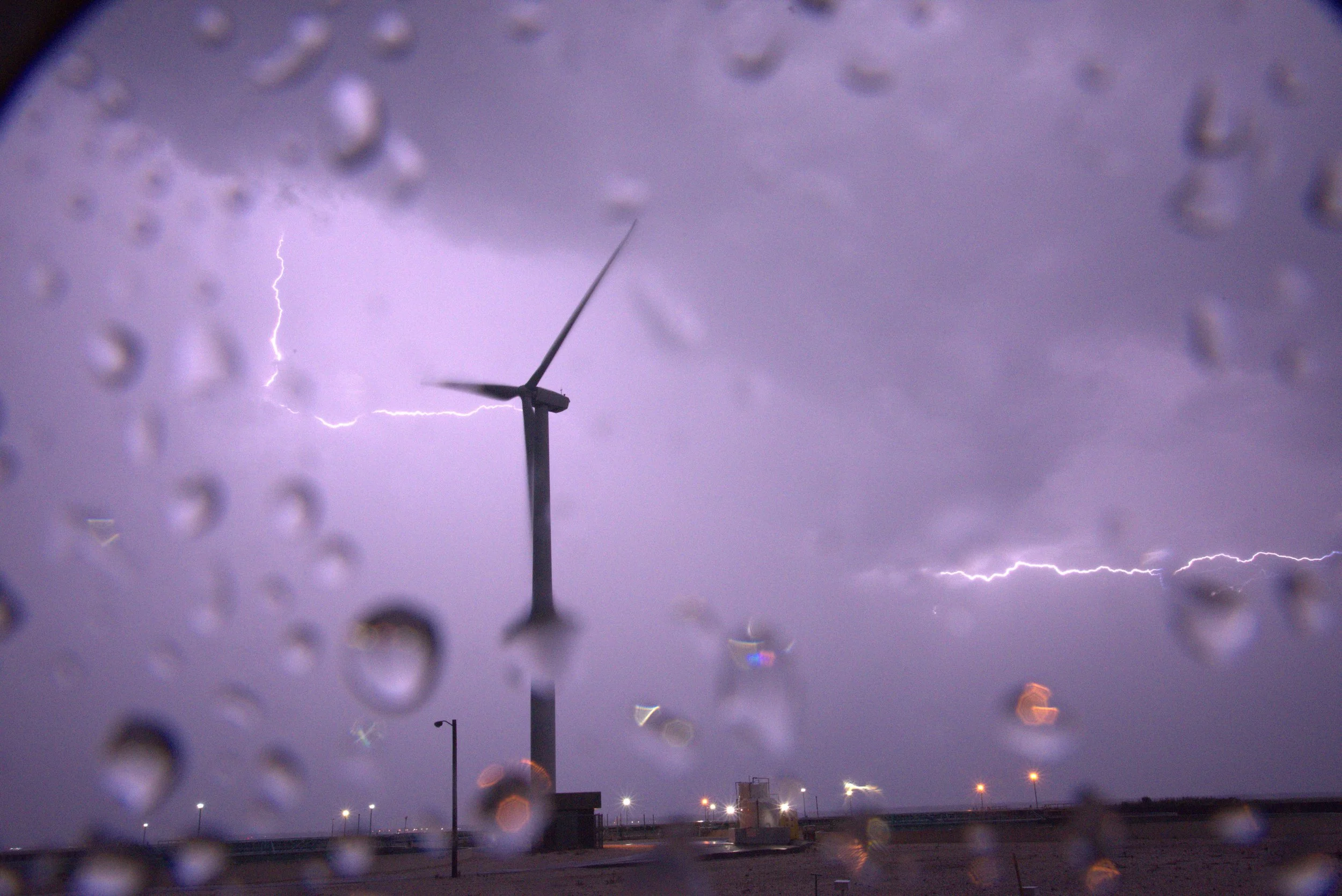
Image captured by a lightning-triggered camera at one of ALP20’s pilot sites.
Lightning is the number one cause of wind turbine blade failure worldwide. It drives hundreds of millions of dollars in annual repair costs — even on turbines that are fully equipped with conventional lightning protection systems. If you work in wind energy O&M, you already know this. The question that has haunted the industry for decades is: why does damage keep happening despite those systems, and what can we do about it?
At Arctura, we've spent the last nine years trying to answer that question. Here's the story of how we got there — and where we are now.
An Unexpected Discovery
In 2017, we were running plasma experiments in our lab in East Greenwich, Rhode Island — work that had nothing to do with lightning protection. During one of those experiments, we observed something unexpected in the behavior of the electric field near a treated surface. It raised a question none of us had been thinking about: could a surface coating influence where lightning attaches to a wind turbine blade?
That question became a hypothesis. The hypothesis became a four-year DOE-funded research program. And nine years, 150-plus high-voltage tests, and many multi-continent commercial deployments later — here we are.
Why Conventional Lightning Protection Falls Short
To understand what ALP20 does, it helps to understand why existing systems sometimes fail. Conventional lightning protection systems — receptors, down conductors, spark gaps — are designed to intercept a strike at a fixed point and route the current safely to ground. In principle, this works well. In practice, lightning doesn't always cooperate.
Lightning attachment behavior varies with blade position, rotation speed, and atmospheric conditions. A receptor that's perfectly positioned for one strike may be completely bypassed by the next. When that happens, the current finds its own path — often through the blade structure itself, causing punctures, delamination, and in severe cases, catastrophic structural failure.
This is the fundamental problem ALP20 was designed to solve.
How ALP20 Works
ALP20 — commercially known as ALEXIT® BladeRep® Topcoat ALP 20, manufactured by Mankiewicz Coating Solutions — is a protective coating applied to the blade surface around existing lightning receptors. It enhances the electric field in the air adjacent to the coating, facilitating early leader formation from the receptor surface. In plain terms: it helps the receptor win the race against undesired attachment points, dramatically increasing the probability that a strike will connect to the receptor rather than puncturing the blade.
Critically, ALP20 works with your existing lightning protection system. No retrofitting. No redesign. One can per blade, applied with a standard roller in two coats.
What the Data Shows
Results from more than 150 laboratory lightning attachment tests — conducted per IEC 61400-24 using field-used GE 1.5sle blade tips at multiple angles and orientations — demonstrate a significant reduction in puncture damage compared to standard topcoats.
When those lab results are combined with real-world field attachment angle distributions from a five-year Japanese measurement campaign, ALP20 is predicted to reduce real-world lightning damage rates from 6.4% to 1.7% — a 73% reduction.
For a wind farm with 100 turbines experiencing an average lightning exposure, that reduction translates to meaningful avoided repair costs every year — without touching your existing LPS.
Where We Are Today
ALP20 has been commercially deployed on more than 100 turbines and counting. Pilot studies are underway at wind farms in the North America, Asia, and Australia, with encouraging early results. We are learning about more installations all over the world every month. Three US-based owner-operators have indicated plans to install ALP20 site-wide at at least one of their wind farms in 2026.
On April 29, 2026, we presented a WindSTAR consortium webinar covering the full technical picture — the physics, the test methodology, the validation data, and early field experience — alongside lightning physics expert Andy Plumer of Element Materials Technology and Kristin Davis of Mankiewicz Coating Solutions. The recording is now available.
Watch the webinar recording → https://echo360.org/media/9d8b8d0a-3591-4584-b8f0-cc7e365656f7/public
Learn more about ALP20 → arcturawind.com/arcguide-landing-page
